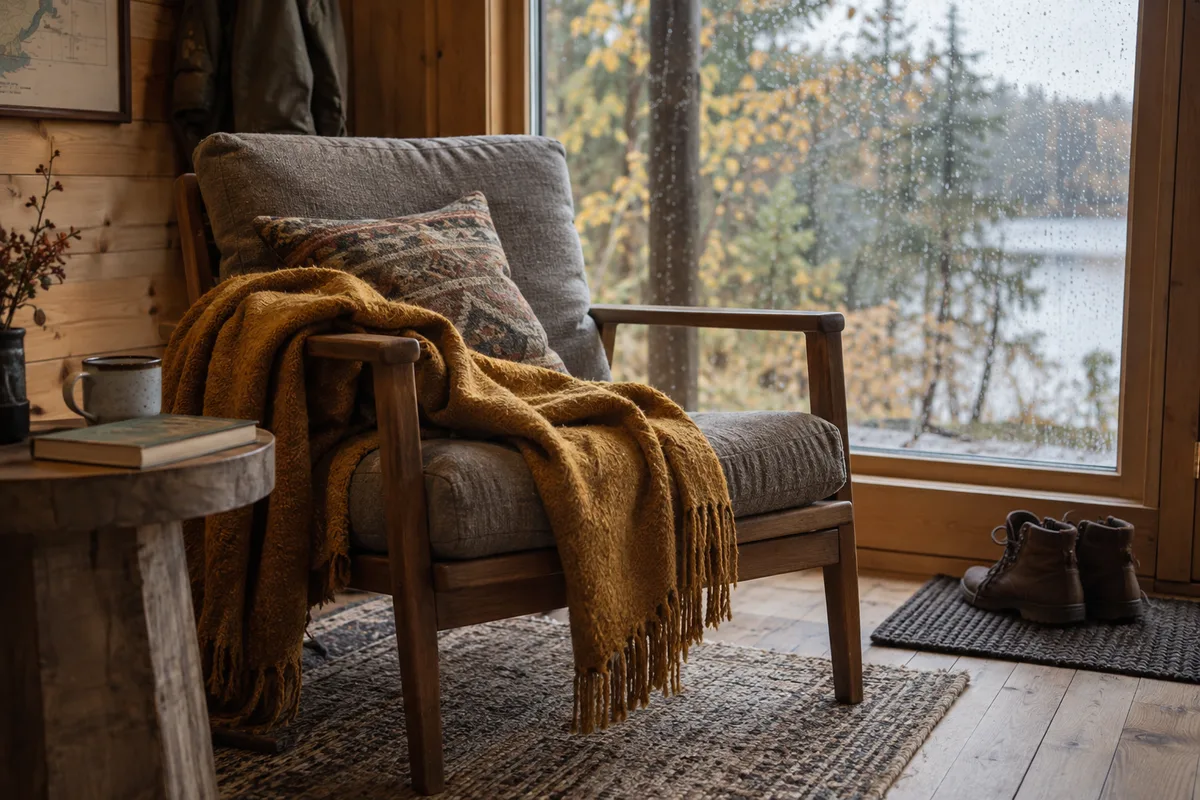
Comfort is made from several ordinary things working together: a place to sit, enough light for what you are doing, dry belongings, suitable sleeping conditions and routines that do not leave everyone cold, overheated or frustrated. A cabin can look complete while one of those everyday details is still missing.
Begin by describing the seasons and activities you actually want to support. This guide helps turn that description into a practical brief. It does not prescribe insulation layers, heating installations or building assemblies; those choices need climate-specific design and appropriate professional checks.
Describe comfort as an activity
Replace “a cozy cabin” with a few concrete scenes. Someone reads for an hour after dinner. Another person gets up early without disturbing a sleeping partner. Two people return with wet outerwear. A visitor needs a comfortable place to sit while food is prepared.
For each scene, note the space, light, surfaces and storage involved. A reading chair needs useful light within reach. Wet outerwear needs an appropriate place to go before it reaches bedding. An early riser needs a route through the room that does not depend on switching on every light.
These scenes give you a way to assess a layout before buying furniture. Mark them on a rough floor plan and look for conflicts. A beautiful table may occupy the only clear route between the entrance and the sleeping area. Moving it on paper costs little and may improve every future visit.
Make a seasonal use agreement
Write the months you intend to visit, the length of stays and what conditions would cause you to postpone. A summer retreat and a year-round home create different expectations. If the first version is seasonal, make that explicit in the brief and in guest information.
List what must be ready before you expand into another season. This might include professional assessment of the building and services, different arrival routines, or an alternative if conditions become unsuitable. Treat expanded use as a planned change rather than assuming that one enjoyable mild-weather visit proves the place is ready for everything.
Keep the comfort plan connected to access and utilities. A pleasant interior does not resolve an unavailable route, interrupted water or a power arrangement designed for a different season. Review those dependencies together before confirming a visit during conditions you have not previously supported.
Give moisture a place in the conversation
Cooking, washing and ordinary occupancy belong in the ventilation brief. The US Department of Energy's ventilation guide explains the relationship between moisture, condensation and ventilation. Warm, moist air meeting a cold surface can produce condensation. Insulation, airtightness and ventilation need to be considered together by someone who understands the building and climate.
As an owner, you can keep useful observations without trying to diagnose the entire building. Record where dampness appears, when it occurs and what activities preceded it. Photograph recurring conditions from the same position. A note such as “moisture on this surface after the second occupied night” is more useful to an assessor than “the cabin feels damp.”
Do not conceal a recurring problem behind new finishes or assume a portable appliance resolves its cause. Ask for appropriate investigation and an explanation of the proposed remedy. Keep the operating instructions for ventilation and other building systems accessible to guests and future caretakers.
Plan the entrance as a working space
Draw the first few minutes after arrival. Where do keys, bags, muddy footwear and wet coats go? Which items need to stay clear of the main walking route? A small, understandable arrangement can remove repeated friction even when the cabin itself is modest.
Separate clean storage from items still drying or awaiting cleaning. Choose storage that fits the actual items rather than buying matching containers first. An awkward long coat, a pair of boots and a folded chair are more useful planning objects than a generic label saying “gear.”
Try a temporary layout before making permanent changes. Use removable labels or a sketch to test where things should live. After a visit, ask which item was repeatedly misplaced and which route became blocked. One well-chosen storage change may solve more than a complete decorative makeover.
Arrange light around use
List the tasks that happen after dark: entering, preparing food, reading, finding the bathroom and leaving in an emergency. Consider glare and the effect on someone trying to sleep as well as brightness. Test positions safely before committing to fixtures or cabinetry.
Keep the electrical requirements with your energy audit. Distinguish lighting used briefly from lighting that stays on for long periods. Have fixed electrical work and any changes to the installation handled appropriately. A room plan helps the qualified person understand what the lighting is meant to accomplish.
Include a suitable independent light in your interruption routine, with storage and checks that match its instructions. The useful question is whether a visitor can find it when needed. A backup hidden in an unlabelled box may technically exist but contribute little to the experience.
Test a complete quiet evening
Before planning a large gathering, walk through a simple evening with the people who will normally use the place. Prepare the intended meal, settle into the room, read or talk, and use the ordinary bedtime routine. Keep a short list of interruptions rather than trying to perfect everything during the test.
Sort observations into layout, equipment, routine and professional questions. “Nowhere to put a cup” may be a layout fix. “Unexplained persistent dampness” calls for appropriate investigation. Sorting the list prevents a shopping trip from becoming the default answer to every discomfort.
Choose one change for the next visit and compare the experience. Record what improved and what remains. The worked cabin weekend offers a wider rehearsal, while the arrival and departure guide helps preserve a comfortable setup between visits.