A workable cabin kitchen starts with a menu you can transport, store, prepare and clean up after. That sounds obvious until a beautiful cooking setup leaves you short of a preparation surface, suitable water or a dependable cold-storage arrangement. Work through the whole meal rather than choosing appliances in isolation.
This guide uses an illustrative two-night visit to help you organize the kitchen. Food choices must suit the people involved, including allergies and dietary needs. Follow product storage instructions and authoritative food-safety guidance throughout travel and the stay.
Write the meals in time order
Begin with Friday arrival, when people may be tired and daylight limited. Choose a meal with a routine you already understand. Then list Saturday breakfast, lunch and dinner, Sunday breakfast and anything needed for the journey home. Add snacks and drinks deliberately rather than discovering them at the shop.
For each meal, write five things: ingredients, storage needs, preparation steps, equipment and cleanup. A simple-looking dish may require several bowls and a large amount of washing. A more carefully chosen menu can reduce the number of tasks without making the weekend feel austere.
Imagine a fictional menu built around a ready-to-assemble arrival meal, a familiar breakfast, a simple lunch and one meal you enjoy cooking. The point is not that these are the best dishes. It is that you can describe their routines before leaving home and identify which parts depend on the cabin's facilities.
Give cold storage a clear job
Mark every ingredient that requires refrigeration. Plan how the required conditions will be maintained from shopping through travel to the last meal. Decide how you will check the conditions, and what you will do if they cannot be maintained. Owning a cooler or refrigerator does not by itself answer those questions.
The USDA's camping food-safety guidance says cold perishable food should be kept at 40°F / about 4°C or below. It limits time outside safe temperature control to two hours, or one hour when temperatures exceed 90°F / about 32°C. Use an appropriate food-storage thermometer and follow the full guidance; appearance and smell cannot reliably establish safety.
Keep raw ingredients separated from ready-to-eat food, following the USDA's handling advice. Arrange the storage so frequently needed items can be found easily. A written menu helps you avoid repeatedly unpacking everything to discover what is available.
Compare a cooler routine with a refrigerator routine
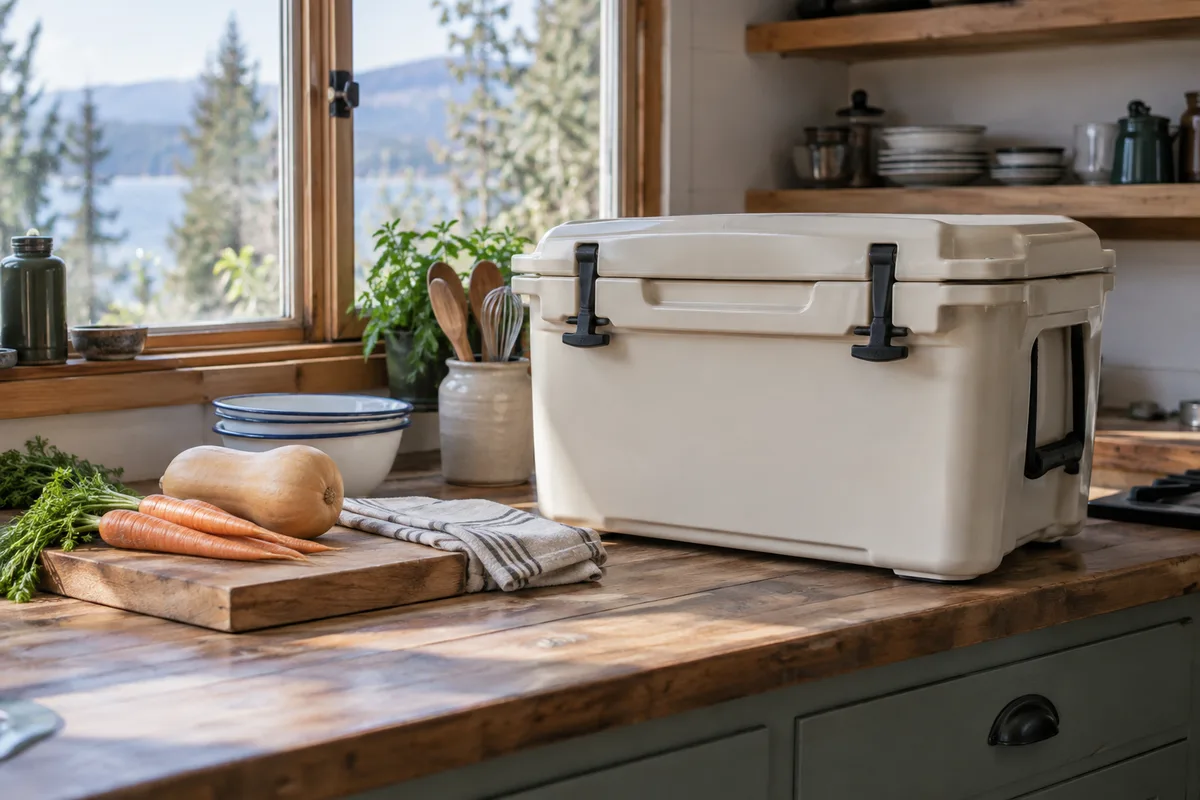
For a cooler, your plan includes preparing it, arranging the cold source, packing appropriately, monitoring conditions and managing the trip home. Ask whether you can maintain the necessary conditions for the whole visit, including delays. Test the routine before relying on it for a longer stay.
For a refrigerator, the plan includes electrical consumption, the conditions it is designed for, appropriate installation and what happens during a power interruption. Record the exact model and relevant operating information. Add it to your energy audit instead of treating it as an unspecified “small appliance.”
Compare the complete routines for your pattern of use. A weekend-only kitchen and a continuously occupied home do not ask the same thing of storage. Include arrival readiness and empty days. If the refrigerator is switched off between visits, follow its instructions for shutdown and recommissioning and plan the food journey accordingly.
Lay out preparation and washing
Draw the path from stored ingredients to preparation, cooking, serving and washing. Identify a suitable clean surface at each relevant step and keep the route understandable. A tiny kitchen benefits from knowing which area is available when, especially if two people are helping.
Record suitable water for food preparation and hygiene, soap, drying arrangements and the destination of used water. Bring those activities into the water budget. Avoid solving storage while leaving cleanup dependent on an undefined outdoor disposal method.
Try the sequence with the actual equipment before the visit. Can the largest intended pot be cleaned in the available arrangement? Is there somewhere suitable for clean items to dry? Are frequently used tools reachable without emptying a cupboard? These are inexpensive discoveries when made during a rehearsal.
Keep cooking within the equipment's intended use
Choose a cooking arrangement only after checking its instructions, site rules and installation requirements. Equipment intended for outdoor use does not become suitable indoors because the weather is poor. Have fuel-burning and fixed electrical installations assessed and installed by appropriately qualified people.
Keep operating instructions and the relevant safety arrangements accessible. Do not depend on one person remembering an unfamiliar sequence. If conditions prevent the intended cooking method, use a previously planned suitable alternative or change the meal. An arrival meal that can be safely prepared with the available facilities reduces pressure to improvise.
In the project brief, distinguish food preparation from space heating. A cooking appliance should not silently become the solution to an uncomfortable room. Resolve comfort through the shelter plan, with equipment used only as intended.
Pack by meal and by return journey
Group shelf-stable items so you can see what belongs to each meal, while maintaining the required storage and separation for other foods. Keep an inventory of items that genuinely remain at the cabin, including their dates and condition. Do not assume an old cupboard supply is usable simply because it was there last time.
Plan the return journey before you pack leftovers. Food that still needs refrigeration needs an appropriate arrangement on the way home as well. Follow the relevant handling guidance when deciding what to keep or discard. Record the quantity you actually used so the next shopping list becomes more accurate.
After the visit, review three things: which meal felt easiest, where the routine became awkward, and what food was unnecessary. Change one or two details for the next trip. A comfortable off-grid kitchen is a repeatable routine, and a modest menu is an excellent way to develop it.
Choose refrigeration around the whole stay
Portable fridge capacity and daily energy demand answer different questions. Use the 12V refrigerator decision guide to compare one versus two temperature zones, ventilation, cold-food storage and the battery reserve needed between charging opportunities.