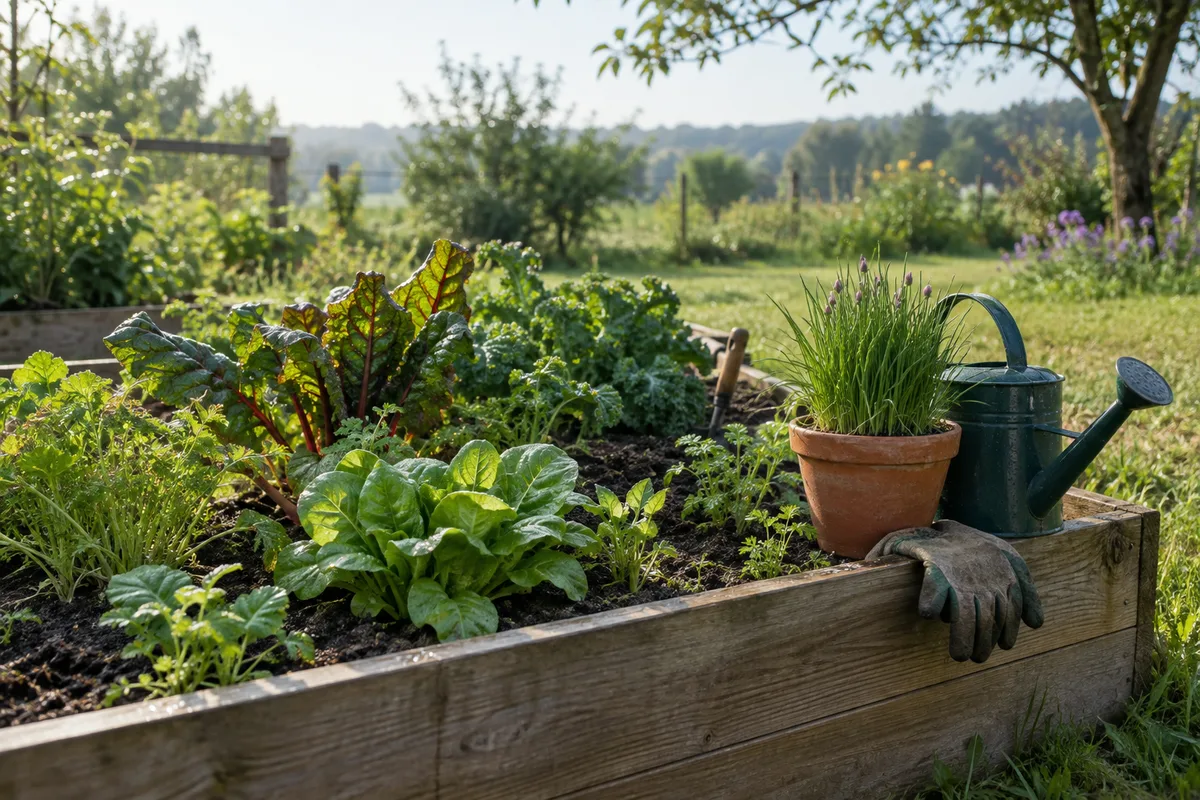
A garden can make a cabin feel lived in, but it also creates a reason to return on days when you had other plans. Before choosing crops, put your visit calendar beside a blank planting plan. The time between visits is part of the growing environment you need to design around.
The best first experiment is one you can observe and care for. It should teach you something about the site, the plants and your own habits without making the weekend depend on a harvest. Keep the ordinary food supply separate while you learn.
Start with what you enjoy using
Write down the herbs or vegetables you actually use in meals. Then narrow the list by looking for locally appropriate growing guidance for your climate and season. A crop that appears constantly in cabin photographs is not automatically a good choice for your conditions or schedule.
Give each candidate a purpose. You might want a small amount of fresh greenery for meals, a crop to learn from, or a garden activity shared with a child. Those are different successes. Define the first year's goal so you can judge the experiment without comparing it to a mature, full-time garden.
Choose one small growing area to begin with. Record its dimensions, access to suitable water and the person responsible. Leave expansion as a later decision. Empty space on a plan can be useful room for learning rather than an invitation to fill every corner immediately.
Observe light and access
Visit the proposed location at different times when practical and record the sun and shade you see. Note the date, because one season's observation does not represent the whole year. Keep nearby vegetation and structures in the sketch so you can explain the conditions to a local gardening adviser.
The University of Maryland Extension's container guide distinguishes the light needs of warm-season crops from leafy cool-season crops and emphasizes access to water. It also warns that some containers need daily watering in hot, dry weather. Those points make visit frequency a central question; a container is not automatically a low-attention choice.
Consider the route you will use while caring for the plants. Carrying water through a crowded entrance or walking across an awkward area repeatedly can make a small task less appealing. Put care access on the sketch, along with a suitable place for the tools you actually expect to use.
Compare beds and containers as routines
Containers can make the growing area clearly bounded and may suit a small available space. Their practical requirements include a suitable container, growing medium, drainage, water and a location that can support the complete arrangement. Follow local horticultural guidance for the crop and container rather than assuming any attractive pot will work.
A bed creates a different project: site and soil assessment, preparation, access and continued care. If the history or condition of the soil raises questions about suitability for edible crops, get appropriate local advice and testing. Do not try to resolve a contamination concern from the appearance of the ground.
Compare both options with your actual visits. Write the recurring tasks beside each one and identify what would happen during your longest ordinary absence. You may discover that growing at home, where you can observe daily, is a better first experiment than installing a larger garden at the cabin.
Design care around the empty days
Place your expected visits on a calendar, then deliberately cancel one. What happens to the garden? If the answer depends on someone else, agree the task with that person and make it specific. “Keep an eye on it” leaves too much interpretation; a clear, locally appropriate care routine is easier to share.
If you consider an irrigation product, investigate its actual requirements and failure behaviour. It may depend on water availability, pressure, power, settings or a communication service. Record those dependencies with the garden plan. An automated action still needs a way to establish whether it has worked.
Keep the water demand separate from household requirements in your water budget. A garden addition should not silently consume a supply intended for another use. Confirm the suitability of the source for the crop and method, particularly if collection or reuse is involved.
Use a small trial to answer one question
Write a question such as “Can we maintain this small planting through our normal fortnightly visits with the agreed care arrangement?” Choose crops and timing with local advice, then keep the experiment small enough to record. The question should have an answer you can observe, not just a hope that the garden will look good.
Photograph from the same position and note what care occurred between images. Record missed visits, unusual conditions and changes to the routine. These details help you distinguish a plant choice problem from a care arrangement that did not happen as planned.
If the trial struggles, change one major factor at a time where practical. Replacing every crop, location and care method at once makes the next outcome harder to interpret. There is no obligation to expand in the first season. A clear decision to keep the garden small can be a successful result.
Plan the harvest before it arrives
Think about who will be present when a crop is ready and how it will be used. A planting that produces during your longest absence may not suit a weekend project. Ask a local adviser about timing and varieties, and keep those expectations tentative until you have experience at the site.
Give any harvest an ordinary destination: a meal, a neighbour who has agreed to receive it, or another appropriate use. Do not assume preservation is effortless or improvise canning instructions. If preserving becomes a separate interest, learn a tested method from an authoritative food-safety source before relying on it.
At the end of the trial, compare the result with your original purpose. Did you enjoy caring for it? Was the travel manageable? Did the plants contribute to meals when you were there? Record those answers before buying more equipment. Your project plan should grow from experience at least as much as the garden does.